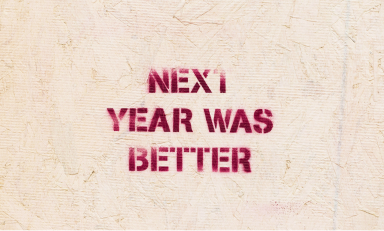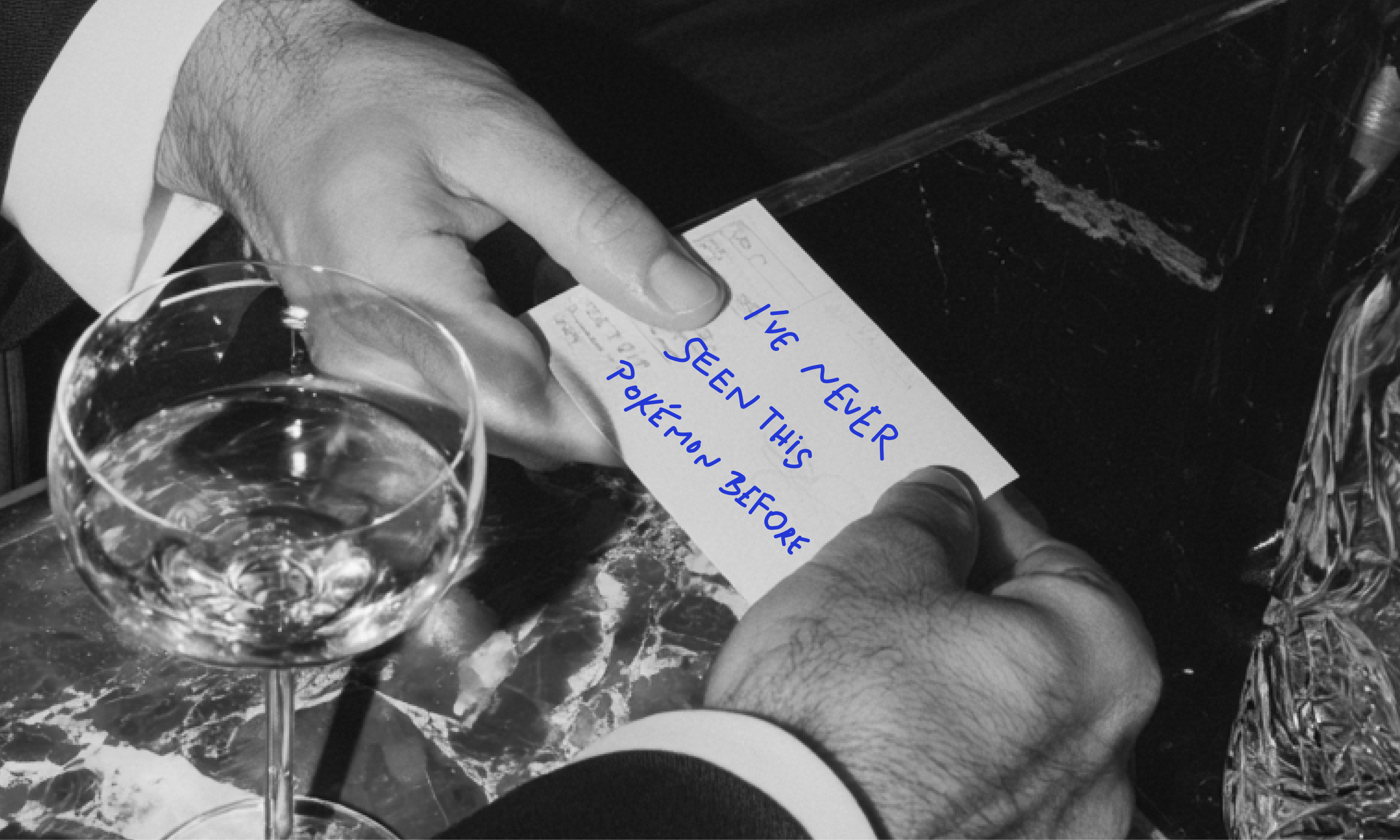

Sounds cheeky, but it's strategy. Clients know their business better than I ever could. What they usually don't know is mine. When someone says they need a new website, that's not a briefing, but a symptom. Something in the system isn't running smoothly. What exactly, is entirely unclear at first. And finding that out is the real job – long before any file is opened.
A solution is ordered, not a problem.
Almost every client comes through the door with a ready-made solution. New website. New logo. "Can't we do something with Instagram?"
Understandable, but the wrong order. Ordering a solution before the problem is on the table almost always ends in the same result: technically sound, but completely missing the point. My job is not to implement this solution immediately. My job is to take a step back and ask what's really behind it. Sometimes the answer is indeed a new logo. Often it's something else – a positioning that was never clarified, a sales funnel that isn't performing, a competitor who suddenly looks better. The logo is then just the point where the problem becomes visible. Marty Neumeier put it succinctly in The Brand Gap : Companies know what they sell, but not who they are. As long as that's not clarified, every new logo and every new website is just a pretty facade for the same uncertainty.
The first question is always: Why now?
Before I want to know anything about colors, fonts, or imagery, one question comes up: Why now?
Why now and not a year ago? What has changed? These questions provide more than any completed briefing template. The answers are often surprisingly honest. A new CEO who wants to make a statement. A major client is gone. The entire industry has shifted, and suddenly you feel outdated. A trade fair in four months, and suddenly there's pressure. That's the real story behind the job – and it's not in any briefing. After that comes the rest, and most of it initially has little to do with design craftsmanship:
– What exactly should change when the project goes live?
– Who do you want to reach – and who definitely not?
– What feeling should someone have when they land on your site for the first time?
– In one year: How will you know it worked?
– And who makes the final call on whether it's good?
The last question is the most uncomfortable and one of the most important. That's because the people who make the final decision are rarely in the initial call. If you don't clarify this early, you'll end up making revisions whose underlying reason is never explicitly stated.
What clients say vs. what they mean
Over time, you learn to interpret certain phrases. Not because clients are dishonest, but because they lack the vocabulary to articulate what's truly going wrong. "It should look modern" rarely has anything to do with trends. Usually, it means: We're afraid of looking dated. Or: Our competitors look younger, and that's annoying.
"Can't this be a bit more eye-catching?" often means: I feel like we're being overlooked.
"It should look more professional" often comes from companies that have just lost a big deal and are wondering if their image was to blame.
"Just go ahead, you're the experts" almost never means I can just do whatever I want, but rather: I don't know what I want, and I'm hoping you'll guess.
Careful listening and empathy are key here. The more you practice this, the quicker you'll discern the true briefing behind what's being said.
The person who happens to say little during the call
A briefing isn't just what's written down. It's primarily what unfolds during the conversation. I always pay attention to who speaks and who remains silent. Often, there's one person who says nothing the entire time, only to drop a single sentence at the end that changes everything. This person usually holds the real influence – regardless of their job title.
I also pay attention to words that are used too often. If someone five times innovative a company that claims to be innovative usually isn't, but rather aspires to be. What people overemphasize is often precisely what's missing.
Stefan Sagmeister once said that he listens almost exclusively during the first few minutes of a conversation. Not out of politeness, but because that's precisely when you see how a company talks about itself when it's not paying attention. More honest than any mission statement that's submitted later.
What remains
In the end, the most important document in a project isn't the briefing sent to me by email. It's what I make of it – after two or three conversations where the right questions were asked. Sometimes it's just a single sentence that captures the essence. But that's almost never in the first email.
Virgil Abloh said that good design is often just a 3% shift from something that already exists. The real move isn't to invent something completely new, but to tweak what's already there until it makes sense. And that happens in the questions, not in the file.
Perhaps this is the part of my work that looks least like design, yet most determines whether something good comes out in the end. I can only start designing once it's clear what's truly needed. Finding that out isn't just a preliminary step. That's the job.
TL;DR
A briefing is a wish, not a final commission. The most important question is always: Why now?
What the client says and what they mean are two different things. 'Modern,' 'striking,' 'serious' are rarely design requests. Usually, there's a feeling behind them.
The real briefing emerges not from the first call, but from the questions asked afterwards.







.png)